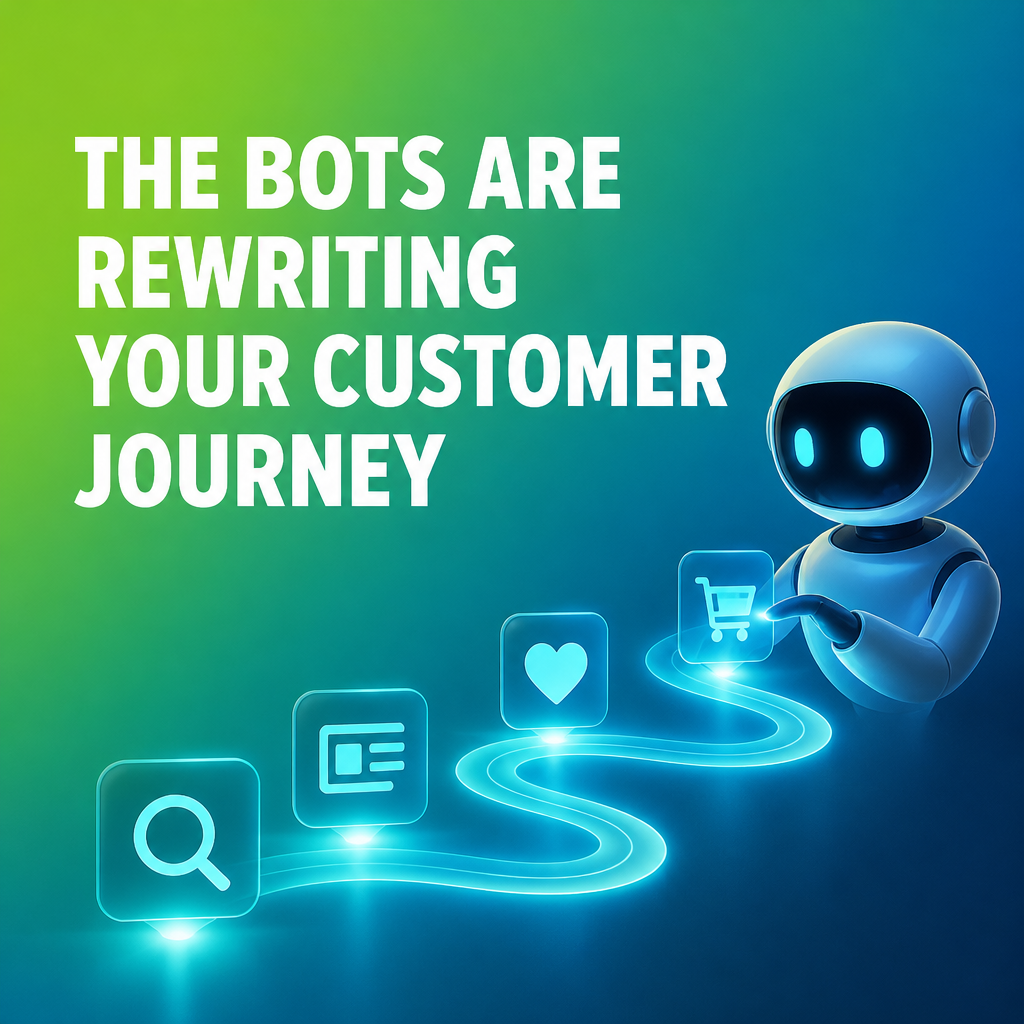

The New Growth Advantage: Trust, Tools, and Smarter Bets
Growth teams are being asked to do more with less while navigating faster automation, changing search behaviour and rising scrutiny around data and authenticity. The risk is not simply wasting budget. It is losing the human understanding that makes marketing persuasive. The strongest response is a disciplined mix of smarter tools, sharper investment decisions, clear governance and genuinely differentiated experiences.
How should marketers respond to automated budget allocation?
Automated advertising systems are becoming better at deciding which channels deserve investment and how budgets should move between them. They can improve efficiency, but they cannot define the right business objective or judge whether apparent performance reflects durable growth. Marketers should use automation to optimise within clear commercial guardrails, not outsource strategy altogether.
The problem is familiar: teams spend hours adjusting bids, audiences and channel splits, yet performance remains vulnerable to tracking gaps and short-term fluctuations. More automation may reduce manual work while making errors harder to see. If a platform shifts spending towards easy-to-measure conversions, it may quietly underfund brand building, retention or higher-value customers.
Set targets around profitable growth, customer quality and payback rather than return on advertising spend alone. Review budget recommendations against incrementality, marginal returns and the full customer journey. Automation is most useful when it handles repetitive allocation decisions while experienced marketers retain responsibility for assumptions, trade-offs and accountability.
Can AI agents protect brand consistency as marketing scales?
AI agents will become more useful when they understand a company’s design rules, content standards, reusable components and technical constraints. New workflows are making it easier to provide that context through structured guidelines, shared libraries and connected systems. This turns generative AI from an improvisational assistant into a governed extension of the brand team.
Without those controls, scale creates a new problem. Every team can produce more assets, but the resulting experience may become fragmented, generic or legally risky. Speed is not differentiation if competitors can generate similar pages, campaigns and interfaces with the same tools.
Marketing leaders should document the elements that must remain consistent, including tone, visual hierarchy, accessibility requirements, claims and approval thresholds. They should also identify where agents can make decisions independently and where human review is mandatory. A reliable operating model combines machine efficiency with deliberate creative direction.
What does the shift towards AI search visibility require?
Search visibility is expanding beyond rankings and clicks. New reporting features are beginning to group the queries for which organisations appear in AI-generated answers, while also highlighting relevant topics where competitors are cited instead. Marketers therefore need to understand how their expertise is represented across themes, not simply monitor individual keywords.
The pain is that traditional reporting can suggest healthy visibility while audiences increasingly receive answers without visiting a website. A brand may rank well yet remain absent from the summaries that shape consideration. This creates an invisible gap between being discoverable and being trusted enough to be included.
Build topic portfolios around customer problems, buying questions and distinctive expertise. Audit whether content is clear, evidence-led and easy for systems to interpret. Measure presence in answer themes alongside qualified visits, assisted conversions and branded demand. The goal is not to produce more content, but to make authoritative content easier to recognise and reference.
Why are transparency and trust becoming growth priorities?
Trust is now a performance factor, not merely a compliance concern. Questions about advertising-enabled surveillance, broad audio capture and labelling AI-generated music show how quickly unclear practices can damage credibility. At the same time, disclosure gives audiences useful context. Organisations that explain what technology does, what it records and where humans remain responsible are better placed to sustain confidence.
The danger is a widening gap between public claims and operational reality. Saying a system detects only one type of signal means little if its infrastructure captures a broader range of information. Similarly, presenting synthetic content as entirely human-made may create short-term engagement but weaken long-term loyalty when audiences discover the truth.
Review marketing technology claims as carefully as product claims. Create plain-language explanations of data use, automated decisions and generated content. Give customers meaningful choices and publish corrections when communication has been incomplete. Transparency should be designed into campaigns and products from the beginning, rather than added after criticism arrives.
How can AI improve decision-making without creating more noise?
The most valuable AI applications are moving beyond content generation into monitoring, analysis and early intervention. New systems can detect emerging online crises, identify anomalies in revenue or retention, and investigate likely causes before teams begin manual analysis. Their value comes from shortening the distance between a signal, a decision and a well-timed response.
Many organisations already have abundant data but limited attention. Dashboards multiply, alerts become background noise and important changes are discovered after the opportunity has passed. Automation can help, but only when it prioritises material issues and connects findings to the people able to act.
Define the decisions each alert should support. Give teams context, confidence levels and recommended next steps, rather than isolated scores. Connect insight delivery to existing workspaces and establish owners for follow-up. The objective is not more intelligence on screen. It is better judgement in the moments that affect growth.
What do changing technology markets teach us about smarter bets?
Recent developments across AI investment, electric vehicles, advanced biology and agency ownership point to the same lesson: promising markets still require disciplined timing and a clear route to value. Growth leaders should resist both reflexive optimism and premature dismissal. They need evidence of customer demand, improving economics, operational capability and a credible plan for adoption.
There is pressure to chase every new platform because competitors appear to be moving quickly. Yet experimentation without a thesis spreads budgets thinly and creates impressive activity without meaningful progress. Conversely, waiting for certainty means missing the window in which learning is cheapest.
Use staged bets. Start with a defined customer problem, a measurable hypothesis and a limited investment. Increase commitment only when usage, retention or commercial outcomes validate the case. For agencies and other service businesses, acquisition or partnership may sometimes solve capability gaps more efficiently than hiring alone, but the economics and integration risks must be tested first.
What This Means for Marketers
- Use automated media allocation, but judge it against profit, incrementality, retention and customer quality rather than one efficiency metric.
- Build an AI governance layer with documented brand rules, approved data sources, human review points and clear ownership.
- Measure visibility across customer questions and AI-generated answers, not only traditional rankings and website traffic.
- Make data collection, surveillance boundaries and synthetic content disclosure visible in customer-facing communications.
- Run small, evidence-based experiments and scale only when the results demonstrate durable customer or commercial value.
The next growth advantage will not belong to the company that automates the most. It will belong to the team that knows where automation creates leverage, where human judgement remains essential and how trust compounds over time. Smarter tools can improve speed and allocation, but meaningful differentiation still comes from understanding people, making credible promises and delivering on them consistently.