
🤖 Key Points
- AI answer engines (ChatGPT, Perplexity, Google AI Overviews) now resolve informational queries directly on the results page, reducing click-through rates on top-of-funnel content by an estimated 30-60% across informational search categories.
- Growth teams that built awareness pipelines on organic blog traffic are experiencing demand collapse at the top of funnel, because users get answers without ever visiting a website.
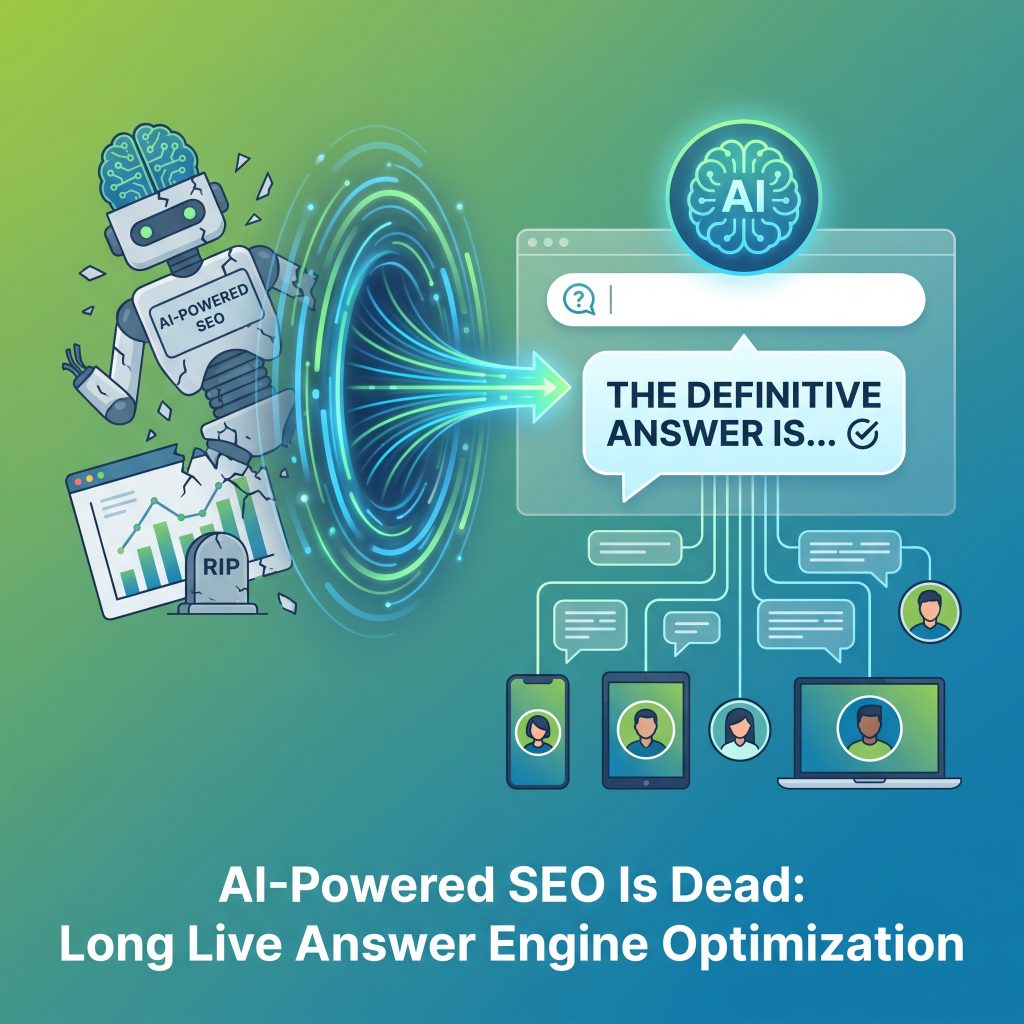
- The strategic response is not to abandon content, but to shift from traffic-capture content to citation-worthy content that gets referenced inside AI answers, keeping the brand visible even without a click.
- Generative Engine Optimisation (GEO) is the emerging discipline that replaces traditional SEO logic at the top of funnel, prioritising structured data, entity authority, and answer-first formatting over keyword density.
- Growth teams must rebalance their top-of-funnel mix toward community-led content, video, thought leadership, and owned channels that AI engines cannot intercept between brand and audience.
AI answer engines are fundamentally restructuring where organic traffic goes and who captures demand. For growth teams, the top-of-funnel playbook built on informational blog content is under direct threat. The question is not whether this shift is happening, but how fast your team adapts before pipeline dries up.
What Is Actually Happening to Top-of-Funnel Traffic
Google AI Overviews, ChatGPT search, and Perplexity are answering informational queries directly. A prospect who previously Googled “what is account-based marketing” and landed on your 1,500-word guide now reads a four-sentence AI summary and moves on. No click. No cookie. No retargeting pixel fired.
A 2024 study by SparkToro and Datos found that Google was already sending roughly 60% of searches to zero-click outcomes before AI Overviews became widespread. As of 2026, that number has climbed further across informational and navigational intent categories. The queries most affected are exactly the ones growth teams have historically used to build awareness: how-to articles, definition posts, comparison guides, and beginner explainers.
The impact is not evenly distributed. Transactional queries (“buy X”, “book a demo”) still drive clicks. Brand queries still drive clicks. But the broad informational content that sits at the top of a typical content funnel is being intercepted at scale.
Why This Breaks the Traditional Growth Content Model
The conventional top-of-funnel content model worked like this: publish high-volume informational content, rank for broad keywords, capture unaware traffic, and nurture it toward conversion via email sequences and retargeting.
That model had three dependencies, all of which AI answer engines are now disrupting:
- Traffic as proof of demand: volume metrics masked whether content was actually creating pipeline, and now that volume is collapsing
- The blog as an awareness channel: informational posts could be found without the reader knowing the brand existed, which is now largely done by the AI layer
- Keyword volume as a content brief: targeting high-volume informational terms made sense when ranking for them delivered visitors, not when it delivers a citation footnote inside an AI answer
Growth teams that have not diversified beyond SEO-driven blog content are now measuring traffic drops and mistaking them for execution problems. The problem is structural.
The Shift to Generative Engine Optimisation (GEO)
Generative Engine Optimisation is the practice of creating content structured to be cited inside AI-generated answers rather than clicked on directly. It accepts that the AI layer is the new top of funnel and optimises for brand presence within that layer.
The core logic: if ChatGPT or Perplexity is going to answer your prospect’s question, you want your brand name, data, and perspective inside that answer. A cited source in an AI answer delivers brand authority even without a click.
GEO-optimised content has distinct characteristics:
- Answer-first structure: the key fact or recommendation appears in the first 50 words, not buried after context-setting prose
- Entity specificity: named statistics, percentages, tools, and timeframes that AI engines can extract and attribute
- Structured formatting: clear ## headings, numbered lists, and FAQ sections that AI parsers can break into discrete answer units
- Authoritative depth: comprehensive coverage of a topic that signals the source is worth citing, not just indexing
This is not a cosmetic change to existing content templates. It requires rewriting the purpose of content from “rank and attract traffic” to “be cited and build authority”.
Rethinking the Top-of-Funnel Mix in 2026
GEO addresses the citation layer, but growth teams also need to reclaim top-of-funnel demand through channels AI cannot intercept.
Video and short-form social content: AI answer engines do not yet summarise YouTube videos or TikTok content in the same way they handle text. Video-first awareness content reaches unaware audiences directly, building brand recognition before the prospect ever searches.
Community and forum participation: Presence in Reddit communities, LinkedIn groups, and niche Slack channels puts the brand into conversations that AI engines scrape but cannot fully replicate. Authentic participation creates the raw material that AI engines later cite.
Owned distribution channels: Email newsletters and SMS lists are unreachable by AI intermediaries. Building direct subscriber relationships is a form of top-of-funnel resilience that no algorithm change can disrupt.
Thought leadership with original data: Proprietary research, original surveys, and data-led reports are among the most cited content types in AI answers. A single original dataset can earn citations across hundreds of AI-generated responses, creating compounding visibility.
Podcast and audio content: Brand-hosted podcasts and guest appearances build familiarity with audiences who are not yet searching, establishing authority before the intent moment arrives.
What Growth Teams Should Do Right Now
This is not a moment for a complete strategy reset, but it does require deliberate reprioritisation.
- Audit your top-of-funnel content by query intent: separate your informational content from transactional and navigational content. Informational content needs GEO reformatting. Transactional content likely still works.
- Reformat high-value posts for AI citation: add answer-first opening paragraphs, structured headings, and FAQ sections to your highest-traffic informational pages.
- Commission at least one original data asset per quarter: surveys, benchmarks, or internal data analysis that no AI engine can generate from existing sources.
- Build or double down on a video presence: the awareness work that blogs used to do now belongs to video.
- Track citation share, not just traffic: use tools that monitor how often your brand appears in AI-generated answers. Traffic is no longer the right proxy for top-of-funnel reach.
The growth teams that treat this as a temporary SEO dip will keep waiting for traffic to return. The teams that recognise it as a structural shift in where awareness is built will have rebuilt their top-of-funnel presence before their competitors notice what happened.
Frequently Asked Questions
Is AI search killing SEO entirely, or just changing it?
AI search is restructuring SEO rather than eliminating it. Transactional, navigational, and branded queries still generate clicks. What is dying is the high-volume informational content model that relied on ranking for broad awareness queries. GEO extends SEO logic into the AI answer layer, so the discipline evolves rather than disappears.
What is Generative Engine Optimisation and how is it different from SEO?
Generative Engine Optimisation (GEO) is the practice of formatting and structuring content so that AI engines cite it inside generated answers. Unlike traditional SEO, which optimises for ranking position and click-through rate, GEO optimises for citation frequency and brand presence within AI responses. It prioritises answer-first structure, entity specificity, and substantive depth over keyword density.
Which content formats are most likely to be cited by AI engines?
AI engines consistently favour structured content with clear headings, numbered lists, FAQ sections, and specific data points. Definition articles, how-to guides, and industry reports with original statistics earn the highest citation rates. Content that provides a direct, extractable answer in the first paragraph is significantly more likely to be referenced than long-form prose introductions.
How should growth teams measure top-of-funnel performance if traffic is declining?
Growth teams should expand their measurement framework to include AI citation share (how often the brand appears in AI-generated answers for target queries), branded search volume growth, direct traffic trends, and video reach metrics. Traffic volume from informational queries is no longer a reliable indicator of top-of-funnel health in an AI-first search environment.
Should we stop publishing informational blog content?
No, but the purpose of informational content shifts from traffic capture to authority building and AI citation. High-quality, structured informational content still earns citations in AI answers, establishes expertise, and supports brand credibility. The mistake is continuing to measure it by pageview volume rather than by its role in building citation authority and supporting lower-funnel content that still drives clicks.