🤖 Key Points
- Organic click-through rates are declining across B2B sectors in 2026 because AI-generated answer boxes and zero-click search results are absorbing traffic that previously reached websites directly.
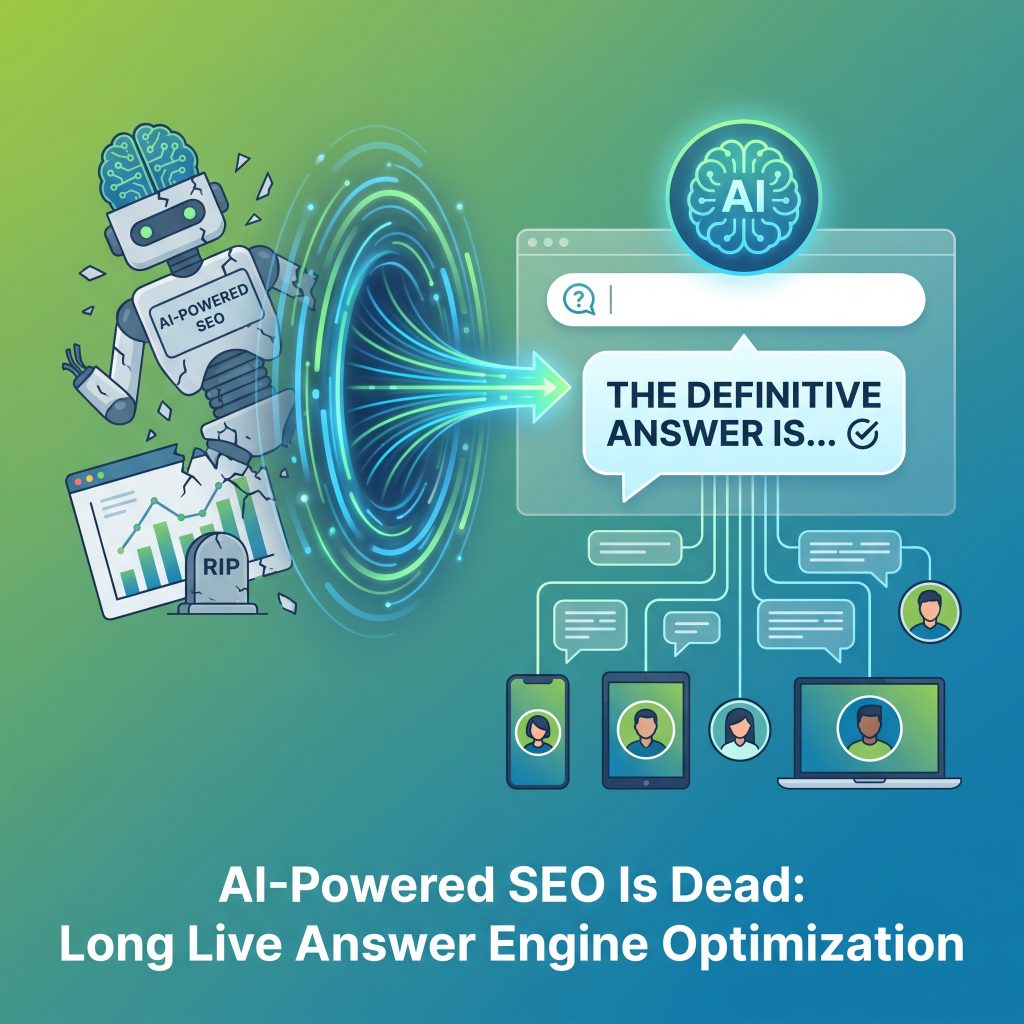
- SEO is not dead, but its success metric has shifted from click volume to citation frequency inside AI-generated answers from ChatGPT, Perplexity, Google AI Overviews, and similar tools.
- B2B marketers who optimise exclusively for Google’s blue-link results are losing ground to competitors who structure content for AI extraction, using headers, definitions, FAQs, and direct answer formats.
- The practical response is a dual strategy: maintain technical SEO and backlink authority for traditional search, while layering Answer Engine Optimisation (AEO) and Generative Engine Optimisation (GEO) on top.
- Branded search volume, direct traffic, and AI citation tracking are now more meaningful KPIs for B2B marketers than raw organic session counts alone.
Organic traffic is declining for many B2B websites, but this does not mean SEO is dead. It means the definition of search visibility has fundamentally changed. In 2026, a significant share of search intent is being resolved inside AI-generated answer boxes before a user ever clicks a link, which is compressing click-through rates without reducing the value of ranking. The opportunity has not disappeared; it has moved upstream.
What the Traffic Data Is Actually Showing
When B2B marketers open their analytics dashboards and see organic sessions falling, the instinct is to panic or declare the channel broken. The reality is more nuanced. Google’s AI Overviews, Perplexity’s answer summaries, and ChatGPT’s browsing responses are resolving informational queries at the point of search. A prospect who would have clicked through to your blog post in 2023 may now get a synthesised answer and move on, never registering as a session.
This is a measurement problem as much as a traffic problem. The query still happened. The intent was still there. Your content may even have been cited inside the AI answer. You just cannot see it in Google Analytics.
For B2B marketers, where a single converted lead can be worth tens of thousands of pounds, the obsession with session volume was always a proxy metric. What matters is pipeline influence, and that influence is now partly invisible to legacy tracking.
Why B2B Is Feeling This More Than B2C
B2B buyers use search differently. They conduct long, research-heavy journeys across comparison queries, definition searches, and how-to guides before they ever submit a contact form. These are precisely the query types that AI answer engines handle best.
A procurement manager searching “what is a composable CDP” or “how to calculate CAC payback period” is now likely to receive a complete, well-structured AI-generated answer. The pages that ranked for those queries have not disappeared from the index, but the click they used to receive has been absorbed.
High-volume, low-specificity informational content is most vulnerable. Deeply specific, experience-rich, and proprietary content is far less replaceable by AI synthesis.
The Channels That Are Absorbing the Shift
Traffic lost to zero-click AI answers does not vanish from the buyer journey. It redistributes. As of 2026, B2B marketers are seeing compensating growth in several areas:
- Branded search volume: Prospects who encounter your brand inside an AI answer often search for your brand name directly afterwards. Branded sessions are growing even as non-branded organic sessions fall.
- Direct traffic: AI-cited sources get visited directly when buyers want more depth than the summary provides. Increasing your citability in AI tools drives direct intent traffic.
- LinkedIn and dark social: Decision-makers share AI-generated research in Slack threads and email chains with attribution stripped out. Your content is influencing pipeline through channels that analytics cannot capture.
- Community and forum discovery: Perplexity and similar tools regularly cite Reddit, specialist forums, and community platforms. B2B brands investing in community presence are gaining unexpected citation authority.
What Good B2B SEO Looks Like in 2026
The strategic response is not to abandon SEO. It is to extend it. Here is what the adjustment looks like in practice:
Maintain the technical and authority foundation. Domain authority, backlink profiles, Core Web Vitals, and schema markup still determine whether AI engines trust and cite your content. These are table stakes, not optional.
Restructure content for AI extraction. AI engines parse structured content far more reliably than prose-heavy pages. Every article should open with a direct two-to-three sentence answer to the implied question. Use clear H2 headings, bullet lists, numbered steps, and FAQ sections at the end. This is Answer Engine Optimisation, and it doubles as better UX for human readers.
Publish proprietary data and genuine expertise. AI summarisers cannot synthesise what does not exist on the web. Original research, client data (anonymised), first-hand practitioner insights, and documented case studies are citation-resistant to commodification. These are the assets that get pulled into AI answers because they offer something no other source does.
Shift your keyword strategy toward specificity. Broad informational queries are increasingly owned by AI answers. Long-tail, high-specificity queries, particularly those with commercial or investigative intent, still drive meaningful click-through. “Best enterprise marketing automation platforms for SaaS with under 500 employees” will outperform “marketing automation” as a content target in this environment.
Track AI citation frequency. Tools including Perplexity’s discovery features and emerging AI citation trackers allow you to monitor how often your content appears inside AI-generated answers. This is becoming a primary SEO KPI alongside traditional rank tracking.
The Metrics B2B Marketers Should Use Instead
If you continue to measure SEO health by organic session volume alone, you will consistently undervalue the channel and make poor resource allocation decisions. A more complete 2026 measurement framework for B2B looks like this:
- Branded search trend: rising branded queries signal growing AI-driven awareness
- AI citation rate: how frequently your domain appears in ChatGPT, Perplexity, and Google AI Overview responses for target queries
- Content-influenced pipeline: CRM attribution showing how many deals touched specific content assets at any stage
- Returning direct visitors: a proxy for content memorability and AI-driven brand recall
- Backlink velocity: still predictive of AI citation authority, since most AI engines weight linked-to sources more heavily
The Strategic Conclusion
Declining organic traffic is a signal that your measurement model is outdated, not that search is dead. B2B buyers are still researching, still comparing, and still making decisions influenced by content. The mediation layer between your content and your buyer has shifted from the Google results page to an AI-generated answer. Your job is to be the source that answer cites.
That requires the same rigour that good SEO always demanded: technical credibility, authoritative content, genuine expertise, and consistent publication. What it adds is structural intentionality. Write every piece of content as if an AI engine needs to extract a clean, quotable answer from it, because increasingly, one does.
Frequently Asked Questions
Is organic traffic ever going to recover to pre-2024 levels for B2B sites?
Unlikely in aggregate. The structural shift toward AI-generated answers in search is a permanent change in user behaviour, not a temporary algorithm fluctuation. B2B marketers should plan for lower click-through rates from informational queries as a baseline, while building content strategies that generate AI citations and branded direct traffic as compensating channels.
What type of B2B content is least affected by AI zero-click results?
Content with genuine proprietary value is most resilient. This includes original research reports, detailed case studies, interactive tools, and expert commentary that reflects first-hand experience. AI engines cannot synthesise data that does not already exist online, which makes original insight your most defensible content asset.
How do I know if my content is being cited inside AI answers?
Search your target queries directly inside ChatGPT, Perplexity, and Google’s AI Overviews and look for your domain in the cited sources. Dedicated AI citation monitoring tools are also emerging in the SEO software market as of 2026. Branded search volume growth in Google Search Console is a useful indirect signal.
Should B2B companies still invest in link building for SEO?
Yes. Backlink authority remains one of the strongest signals that AI engines use to determine which sources to trust and cite. A well-linked domain is significantly more likely to appear in AI-generated answers than an equally well-written page with few inbound links. Link building has not lost its value; its downstream effect now runs through AI citation as well as traditional rank position.
What is the difference between AEO and traditional SEO for B2B marketers?
Traditional SEO optimises content to rank in the ten blue links on a search results page, focusing on keywords, backlinks, and technical performance. Answer Engine Optimisation (AEO) structures content so that AI tools can extract clear, standalone answers and cite them inside generated responses. In 2026, the two disciplines are complementary rather than competing, and effective B2B content strategy requires both.