
🤖 Key Points
- AI agents are autonomous software systems that perceive inputs, reason through objectives, and execute multi-step tasks without human intervention at each stage.
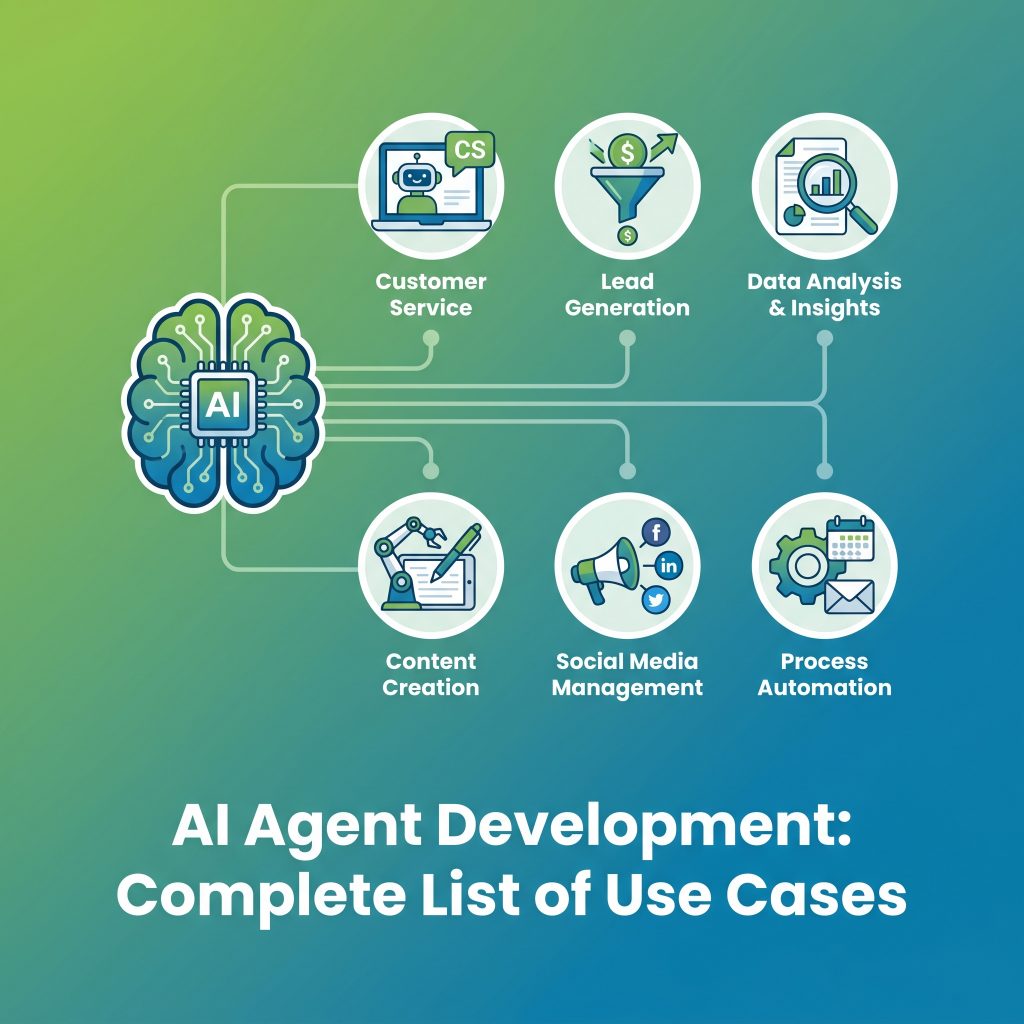
- Common AI agent use cases include lead qualification, content personalisation, customer support automation, competitive intelligence monitoring, and internal knowledge retrieval.
- The deployment process for AI agents typically follows four stages: define the objective, select the underlying model and tools, build the action layer, then test and iterate in a live environment.
- Businesses deploying AI agents for sales development report average response time reductions from 48 hours to under 3 minutes, directly improving conversion rates.
- Successful AI agent deployment requires clear scope definition, integration with existing data systems, and a human-in-the-loop review process during the first 30 to 90 days.
AI agents move beyond simple chatbots by autonomously planning, reasoning, and executing sequences of actions to complete defined business objectives. Unlike a standard automation workflow that follows fixed rules, an AI agent adapts its approach based on context, makes decisions between available tools, and loops back to verify its own outputs. For businesses evaluating AI agent development, the gap between concept and deployment is narrower than most expect, provided the use case is defined before the technology is chosen.
What Makes an AI Agent Different from Standard Automation
Traditional marketing automation follows an if-this-then-that logic. AI agents operate on goal-directed reasoning. Given an objective, say, researching a prospect and drafting a personalised outreach sequence, an agent will determine which tools to call, in what order, and how to evaluate whether the output meets the goal.
The architectural difference matters practically. A standard automation breaks when the input varies. An AI agent handles variation by design. This is why use cases that involve unstructured data, variable inputs, or multi-step decision trees are where agents deliver the highest return.
Use Case 1: AI Agents for Lead Qualification and Outreach
One of the most deployed AI agent applications in B2B marketing is automated lead qualification. The agent ingests new leads from a CRM or form submission, researches the prospect using web search tools and LinkedIn data, scores the lead against ideal customer profile criteria, and either routes them to a sales rep or triggers a personalised email sequence, all without human involvement.
In practice, teams using this approach have reduced lead response times from an industry average of 48 hours to under 3 minutes. At that speed, contact rates increase by as much as 400%, according to research published by Harvard Business Review on lead response benchmarks. The agent handles the volume; the sales team handles the conversations.
What the deployment looks like:
- Data source: CRM (HubSpot, Salesforce) plus enrichment tools like Apollo or Clearbit
- Model layer: GPT-4o or Claude 3.5 Sonnet for reasoning and drafting
- Action layer: Email API, CRM update webhook, Slack notification
- Review process: Human approval on outreach templates weekly, not per send
Use Case 2: AI Agents for Content Personalisation at Scale
Content personalisation has long been a promise that delivery infrastructure could never fulfil. AI agents change that. A personalisation agent monitors which segments are engaging with which content, identifies gaps in the content library, briefs writers or generates first drafts, and updates website copy dynamically based on visitor attributes.
For an e-commerce brand operating across five audience segments, an AI agent managing content personalisation can handle what would otherwise require three full-time content strategists. The agent does not replace editorial judgement, it removes the operational overhead that prevents that judgement from being applied.
Use Case 3: Competitive Intelligence Monitoring
Monitoring competitors manually is unsustainable at any meaningful scale. An AI agent built for competitive intelligence will track competitor websites, press release feeds, job postings, social media activity, and pricing pages on a defined cadence. It then synthesises changes into a structured weekly briefing, flags material shifts, and, in more advanced configurations, suggests strategic responses.
This use case is particularly well-suited to AI agents because the inputs are unstructured (web content varies wildly in format), the volume is high, and the output requirement is consistent. Teams deploying this type of agent typically recover 6 to 10 hours per week across marketing and product functions.
Use Case 4: Internal Knowledge Retrieval and Operations Support
Not all AI agent value is customer-facing. Internal knowledge agents, often called enterprise RAG (Retrieval-Augmented Generation) agents, connect to a company’s document stores, wikis, and policy databases. Employees ask questions in natural language; the agent retrieves the relevant source, reasons across multiple documents if needed, and returns a direct answer with source citations.
For growing agencies and scale-ups, this use case solves a real problem: institutional knowledge locked in PDFs, Notion pages, and email threads that no one can find when they need it. Deployment typically uses a vector database (Pinecone, Weaviate, or Chroma) paired with an orchestration layer like LangChain or LlamaIndex.
From Concept to Deployment: The Four-Stage Process
Regardless of use case, AI agent development follows a repeatable deployment path:
- Define the objective precisely. Agents fail when the goal is vague. “Help with marketing” produces nothing useful. “Research inbound leads and draft a personalised first-touch email within 10 minutes of form submission” produces a deployable spec.
- Select the model and tools. Match the reasoning complexity of the task to the model. GPT-4o handles multi-step reasoning well. Lighter tasks can run on GPT-4o-mini or Claude Haiku at lower cost. Identify which external tools the agent needs to call: search APIs, CRM connectors, email platforms, data enrichment services.
- Build the action layer. This is where most development time sits. The agent needs reliable tool integrations, error handling for when APIs return unexpected results, and output formatting that fits downstream systems. Frameworks like LangChain, CrewAI, or AutoGen handle orchestration; custom connectors handle the business-specific integrations.
- Test, monitor, and iterate. Deploy to a controlled environment first. Run 50 to 100 real inputs through the agent before going live. Instrument every action so failures are traceable. Build a human-in-the-loop checkpoint for the first 30 to 90 days, not because the agent cannot be trusted, but because this is when you discover the edge cases your spec did not anticipate.
The Deployment Mistakes That Stall AI Agent Projects
- Over-scoping the first agent. Start with a single, well-bounded task. Teams that try to build an all-in-one agent in the first sprint rarely ship anything.
- Ignoring data quality. An agent is only as good as the data it acts on. If your CRM is inconsistently populated, the lead qualification agent will produce inconsistent results.
- No fallback logic. Every agent needs a defined behaviour for when it cannot complete a task. Silent failures are worse than visible ones.
- Skipping the evaluation framework. Define what success looks like before deployment, specific metrics, acceptable error rates, latency thresholds, so you can assess performance objectively.
Frequently Asked Questions
What is an AI agent in the context of business automation?
An AI agent is software that uses a large language model to reason through a goal, select and call tools, and execute multi-step tasks autonomously. Unlike rule-based automation, agents handle variable inputs and adapt their approach based on context, making them suitable for complex, unstructured business processes.
How long does it take to deploy an AI agent for a marketing use case?
A focused, single-task AI agent, such as a lead qualification or outreach agent, typically takes 4 to 8 weeks from scoping to production deployment. More complex agents with multiple integrations and extensive testing requirements can take 3 to 6 months. Scope discipline at the start is the biggest variable affecting delivery time.
Which AI agent framework should I use for business deployment?
For most business applications, LangChain or LlamaIndex provide robust orchestration with strong integration support. CrewAI is well-suited to multi-agent workflows where several agents collaborate on a task. The right choice depends on your existing tech stack and whether your use case involves single-agent or multi-agent architecture.
Do AI agents require ongoing maintenance after deployment?
Yes. AI agents require monitoring for model drift, API changes from third-party tools, and edge cases that emerge from real-world inputs. A realistic maintenance budget is 10 to 20% of the initial development cost per quarter, covering prompt updates, integration fixes, and performance evaluation against defined success metrics.
What is the difference between an AI agent and an AI chatbot?
A chatbot responds to inputs within a single conversation turn and has no ability to take action outside the conversation. An AI agent operates across multiple steps, calls external tools, executes actions in connected systems, and persists state across a workflow. The distinction is action-taking capability, not conversational ability.